The ancient dog breeds, once revered companions of emperors and shamans, now stand at the crossroads of extinction and revival. Among them, the Tibetan Spaniel and the Xoloitzcuintli (Mexican Hairless Dog) carry genetic legacies so unique that their preservation could rewrite our understanding of canine evolution. These living relics, nearly lost to time, are experiencing an unlikely renaissance through cutting-edge genetic preservation initiatives.
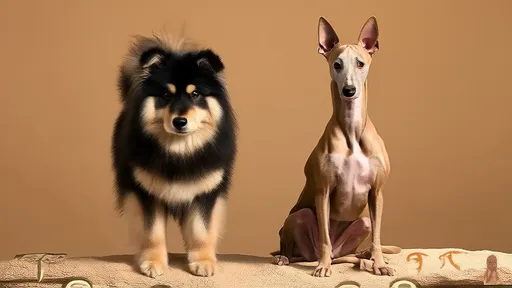
In the high-altitude monasteries of Tibet, where prayer flags flutter against cobalt skies, the Tibetan Spaniel was nearly as sacred as the monks who bred them. Weighing barely 10 pounds, these compact dogs with lion-like manes served as "little monks" – warming laps during meditation and alerting to intruders with surprisingly resonant barks. Their genetic isolation over two millennia created extraordinary adaptations: a blood oxygen efficiency rivaling Tibetan mastiffs at 1/10th the size, and a unique thyroid hormone profile that allows survival in -30°C winters. Modern genetic sequencing reveals a haplotype cluster completely distinct from other Asian toy breeds, containing novel genes related to hypoxia tolerance that could inform human altitude sickness research.
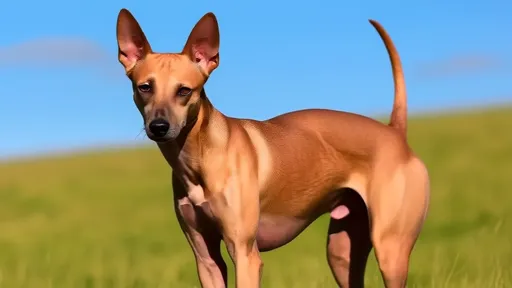
The Xoloitzcuintli's story unfolds in the volcanic highlands of Mesoamerica, where Aztec priests believed these hairless canines guided souls through Mictlán, the underworld. Their 3,000-year pedigree makes them one of the most genetically "primitive" breeds, retaining traits from the earliest New World dog migrations. Unlike most modern breeds, Xolos possess an unbroken genetic link to pre-Columbian canines – their DNA contains ancestral markers that disappeared elsewhere when European dogs arrived. Their most fascinating feature isn't the lack of fur (caused by a dominant FOXI3 mutation), but their extraordinary immune profiles. Living without protective coats forced the development of enhanced antimicrobial peptides in their skin, offering potential insights for autoimmune disease therapies.
What makes these ancient breeds genetically invaluable isn't just their rarity, but the evolutionary wisdom encoded in their DNA. The Tibetan Spaniel's compact size belies extraordinary lung capacity and red blood cell efficiency – adaptations that emerged naturally without the extreme selective breeding seen in modern brachycephalic breeds. Similarly, the Xolo's hairlessness developed alongside robust epidermal defenses, a natural balancing act that eludes many engineered hairless animal varieties. These represent evolutionary "best practices" that took centuries to refine, unlike the often problematic traits humans have recently bred into dogs.
Modern genomics reveals shocking vulnerabilities in these ancient lines. The Tibetan Spaniel population bottleneck during China's Cultural Revolution reduced genetic diversity by an estimated 78%, while European attempts to "improve" Xolos in the 19th century nearly erased their pre-Columbian genetics. Both breeds now show concerningly high coefficients of inbreeding (Tibetan Spaniel: 34%, Xolo: 28%) compared to the 5-10% ideal for healthy populations. This makes their remaining gene pools critically fragile – a single widespread disease could permanently erase unique genetic variants.
The revival efforts employ fascinating interdisciplinary approaches. Cryopreservation teams are collecting reproductive material from the last "foundation stock" dogs in remote Tibetan villages and Mexican pueblos. Meanwhile, archaeologists are extracting DNA from 1,000-year-old canine remains to identify genes lost during modern breeding. Most ambitiously, computational biologists are creating "genetic backup" by simulating how these breeds' DNA might safely incorporate new diversity from related landrace dogs without losing core traits.
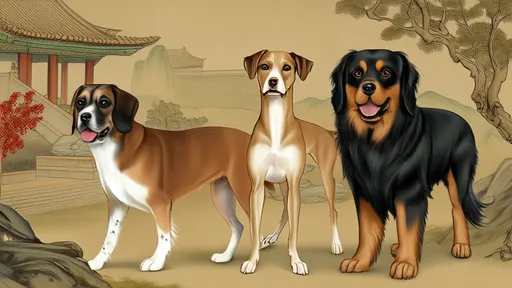
Beyond scientific value, these breeds represent living cultural heritage. Tibetan Spaniels appear in 8th-century thangka paintings as manifestations of the snow lion, while Xolos feature prominently in Day of the Dead ceremonies as spiritual guides. Their preservation isn't just about saving dogs – it's maintaining tangible connections to human history. As one Tibetan monk caretaker remarked, "When the last true temple spaniel breathes, so too does the wisdom of Padmasambhava."
The project's implications extend far beyond these two breeds. Successful revival could create templates for saving other ancient dogs like the Hawaiian Poi Dog or Tahitian Dog. More profoundly, it challenges our assumptions about genetic "progress" – sometimes the most advanced solutions are found not in creating novelty, but in preserving what evolution already perfected. In the Tibetan Spaniel's effortless altitude adaptation and the Xolo's robust hairless physiology, we find masterclasses in biological problem-solving that took millennia to develop.

By /Jun 12, 2025

By /Jun 12, 2025

By /Jun 12, 2025

By /Jun 12, 2025

By /Jun 12, 2025
By /Jun 12, 2025

By /Jun 12, 2025

By /Jun 12, 2025

By /Jun 12, 2025

By /Jun 12, 2025
By /Jun 12, 2025
By /Jun 12, 2025
By /Jun 12, 2025
By /Jun 12, 2025
By /Jun 12, 2025

By /Jun 12, 2025