Dolphins: Intelligent Sonar Medical Scanning

Jun 10, 2025 By

Dolphin-Inspired Sonar: The Next Frontier in Medical Imaging

The ocean’s most intelligent creatures have long fascinated scientists with their ability to navigate and communicate using sound. Dolphins, in particular, possess an extraordinary biological sonar system known as echolocation, which allows them to detect objects with remarkable precision. Today, researchers are harnessing the principles of dolphin echolocation to revolutionize medical imaging, creating a new generation of diagnostic tools that are non-invasive, highly accurate, and capable of detecting abnormalities at earlier stages than ever before.

Traditional medical imaging techniques, such as X-rays, MRIs, and ultrasounds, have been invaluable in diagnosing diseases. However, they come with limitations—exposure to radiation, high costs, and sometimes insufficient resolution for early detection. Inspired by the way dolphins emit sound waves and interpret their echoes, scientists are developing advanced sonar-based scanning systems that could overcome these challenges. These systems aim to replicate the efficiency and precision of dolphin echolocation, offering a safer and more accessible alternative for patients worldwide.

How Dolphin Echolocation Works

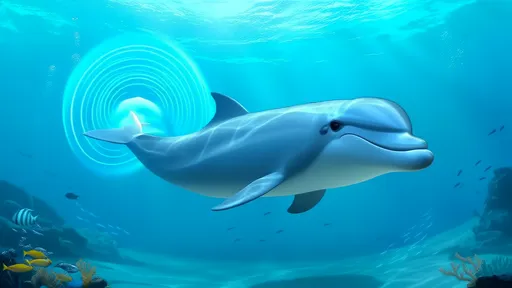
Dolphins produce a series of high-frequency clicks that travel through water and bounce off objects in their environment. By analyzing the returning echoes, they can determine the size, shape, distance, and even internal structure of their targets. This natural sonar is so refined that dolphins can distinguish between different types of fish or detect tiny objects buried in sand. Researchers believe that mimicking this process in medical imaging could allow for similarly detailed scans of human tissues, potentially identifying tumors, blood clots, or other anomalies with unprecedented clarity.

One of the most promising applications of this technology is in breast cancer detection. Current mammography methods, while effective, can be uncomfortable and occasionally miss early-stage tumors. A dolphin-inspired sonar system, however, could provide a painless, radiation-free alternative capable of detecting minute changes in tissue density. Early prototypes have shown encouraging results, with some systems achieving resolutions comparable to MRI scans but at a fraction of the cost.

The Science Behind Bio-Inspired Sonar

To replicate dolphin echolocation, engineers are developing specialized transducers that emit and receive sound waves at varying frequencies. These devices are paired with sophisticated algorithms that interpret the echoes in real time, constructing detailed 3D images of internal organs. Unlike traditional ultrasound, which relies on lower frequencies, these systems use a broader spectrum of sound waves, allowing for deeper penetration and higher resolution.

Another breakthrough lies in adaptive beamforming—a technique borrowed from marine biology where dolphins dynamically adjust their sonar beams to focus on specific targets. In medical applications, this means the system can automatically refine its scanning parameters based on the patient’s anatomy, reducing artifacts and improving diagnostic accuracy. Such adaptability could be particularly useful in imaging complex structures like the heart or brain, where conventional methods often struggle with motion interference.

Challenges and Ethical Considerations

Despite its potential, dolphin-inspired medical sonar faces several hurdles. One major challenge is replicating the sensitivity of a dolphin’s auditory system, which can detect echoes as faint as a billionth of the original signal. Current technology still lags behind nature in this regard, though advancements in machine learning are helping bridge the gap. Additionally, there are concerns about the ethical implications of using high-frequency sound waves in humans, particularly for prolonged or repeated scans. Researchers are carefully studying long-term effects to ensure patient safety.

Another consideration is the integration of this technology into existing healthcare infrastructures. Hospitals and clinics would need to invest in new equipment and training, which could slow widespread adoption. However, proponents argue that the long-term benefits—reduced costs, improved diagnostic rates, and enhanced patient comfort—far outweigh these initial obstacles.

The Future of Sonar-Based Medicine

As research progresses, the possibilities for dolphin-inspired medical imaging continue to expand. Some scientists envision portable, handheld devices that could be used in remote or underserved areas, bringing high-quality diagnostics to populations with limited access to traditional healthcare. Others are exploring applications beyond imaging, such as using sonar waves for targeted drug delivery or even non-invasive surgery.

The intersection of biology and technology has always driven innovation, and the study of dolphin echolocation is no exception. By learning from these marine mammals, we may soon unlock a new era of medical diagnostics—one where early detection is routine, procedures are painless, and healthcare is more equitable. The ocean’s wisdom, it seems, holds the key to healing humanity in ways we are only beginning to understand.
Recommend Posts
Animal

Flying Squirrels: Gliding Through the Trees with Built-in Wings"

By /Jun 10, 2025

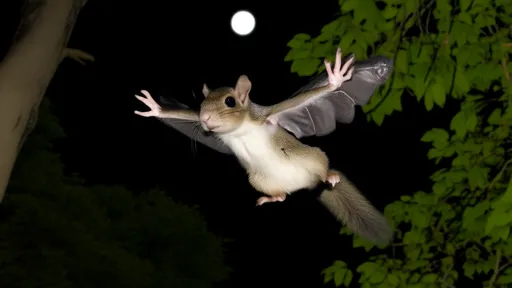
The forest canopy is a realm of hidden highways and aerial acrobats, where few mammals have mastered the art of true flight. Among these exceptional creatures, the flying squirrel – or more accurately, the gliding squirrel – reigns supreme. These nocturnal marvels have evolved a unique adaptation that transforms them into living paragliders, effortlessly navigating the treetops with a membrane called the patagium.
Animal

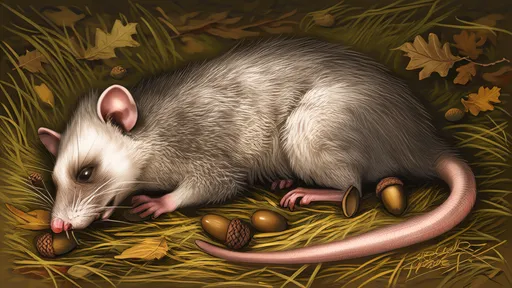
The Physiological Mechanism of Opossum's Death-Feigning Performance

By /Jun 10, 2025

The Virginia opossum (Didelphis virginiana) has perfected one of nature’s most bizarre survival tactics: playing dead. This behavior, often referred to as "playing possum," is not merely an act but a complex physiological response that baffles predators and researchers alike. When threatened, the opossum collapses, its body stiffens, and it enters a state of thanatosis—a death-feigning strategy so convincing that even the most persistent predators lose interest. But what exactly happens inside the opossum’s body during this dramatic performance?
Animal

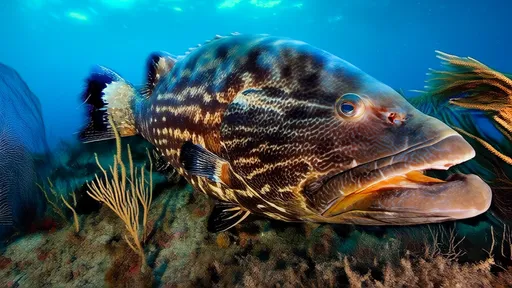
Stonefish: The Perfectly Camouflaged Deadly Assassin

By /Jun 10, 2025

The ocean floor hides some of nature's most extraordinary masters of disguise, but few compare to the stonefish – a creature so perfectly adapted to its environment that it becomes virtually invisible. This unassuming predator doesn't chase its prey or rely on speed; instead, it waits with infinite patience, blending seamlessly into the coral rubble until its next meal swims obliviously within striking distance. What makes this fish truly remarkable isn't just its hunting strategy, but the terrifying cocktail of neurotoxins it delivers through dorsal spines sharper than hypodermic needles.
Animal

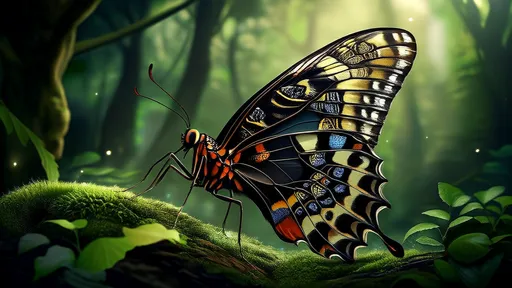
Kaleidoptera: The Master of 3D Camouflage Art

By /Jun 10, 2025

In the dense undergrowth of Southeast Asian forests, a seemingly dead leaf suddenly takes flight—only to vanish again moments later when it alights on a branch. This is no ordinary insect, but Kallima inachus, the legendary orange oakleaf butterfly, whose mastery of 3D camouflage has fascinated scientists and artists alike for centuries. Unlike flat-patterned camouflage seen in most species, the dead-leaf butterfly employs an extraordinary multisensory deception, combining optical illusion, texture mimicry, and behavioral acting to become virtually invisible.
Animal

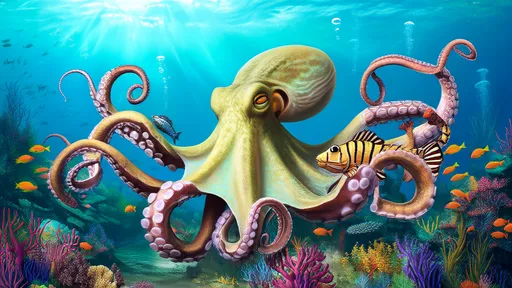
Mimic Octopus: The Master of Camouflage Mimicking 15 Species

By /Jun 10, 2025

The ocean’s depths conceal some of nature’s most astonishing performers, but few rival the mimic octopus (Thaumoctopus mimicus) in sheer theatrical brilliance. This eight-armed illusionist doesn’t just hide—it transforms, adopting the guise of venomous sea snakes, floundering flounders, and even spiky lionfish with uncanny precision. Discovered in 1998 off the coast of Sulawesi, this master of deception has rewritten our understanding of animal intelligence and survival strategies in the marine world.
Animal

Octopus: Light-sensitive Cells for Skin Color Change

By /Jun 10, 2025

The ocean’s depths hold countless mysteries, but few are as visually mesmerizing as the cephalopod’s ability to change color in the blink of an eye. Among these masters of disguise, the octopus stands out—not just for its intelligence, but for its otherworldly capacity to shift hues, patterns, and even textures. For years, scientists believed this transformation was solely controlled by the creature’s nervous system. Recent discoveries, however, have unveiled a far more intricate mechanism: light-sensitive cells embedded directly in the octopus’s skin, capable of detecting and responding to light independently of the eyes or brain.
Animal

Dolphins: Intelligent Sonar Medical Scanning

By /Jun 10, 2025

To replicate dolphin echolocation, engineers are developing specialized transducers that emit and receive sound waves at varying frequencies. These devices are paired with sophisticated algorithms that interpret the echoes in real time, constructing detailed 3D images of internal organs. Unlike traditional ultrasound, which relies on lower frequencies, these systems use a broader spectrum of sound waves, allowing for deeper penetration and higher resolution.
Animal

Migratory Birds: Natural Navigators of Earth's Magnetic Field

By /Jun 10, 2025

For centuries, the mysterious ability of migratory birds to traverse vast distances with pinpoint accuracy has captivated scientists and nature enthusiasts alike. These feathered navigators undertake journeys spanning thousands of miles, often returning to the same nesting grounds year after year. While visual landmarks and celestial cues play a role, growing evidence suggests Earth's magnetic field serves as their primary compass—an invisible guidance system woven into the fabric of their biology.
Animal

Bats: Living Radars of Ultrasonic Imaging

By /Jun 10, 2025

The night sky belongs to the bats. While humans fumble in darkness, these winged mammals navigate with eerie precision, hunting insects and avoiding obstacles with ease. Their secret? A biological sonar system so sophisticated it puts human-engineered radar to shame. For decades, scientists have studied bat echolocation, unraveling its mysteries to inspire breakthroughs in medical imaging, military surveillance, and autonomous vehicle navigation.
Animal

Jumping Spider: A Miniature Hunter Calculating Trajectories

By /Jun 10, 2025

In the intricate world of arthropod predation, few hunters demonstrate the precision and computational brilliance of jumping spiders. These eight-legged acrobats, belonging to the family Salticidae, have evolved an extraordinary ability to calculate complex ballistic trajectories mid-leap—a skill that puts most vertebrate predators to shame. Unlike their web-spinning cousins, jumping spiders rely on keen eyesight, rapid neural processing, and an internal "ballistics computer" to ambush prey with terrifying accuracy.
Animal

Spray Beetle: Defense Mechanism of High-Temperature Venom

By /Jun 10, 2025

The natural world is full of extraordinary defense mechanisms, but few are as dramatic and effective as the boiling chemical spray employed by the bombardier beetle. This small insect, often overlooked in the underbrush, harbors a secret weapon that rivals the most sophisticated military technology. When threatened, it unleashes a scalding, toxic spray with pinpoint accuracy, deterring predators with a combination of heat, noise, and chemical irritation. The science behind this defense is as fascinating as it is complex, involving precise biochemical reactions and anatomical adaptations that have evolved over millions of years.
Animal

Skunk Beetles: The Art of Chemical Weapon Ejection"

By /Jun 10, 2025

In the hidden corners of forests and grasslands, a tiny insect executes one of nature's most precise and violent chemical attacks. The bombardier beetle, often colloquially called the "fart beetle," doesn't just release noxious fumes—it weaponizes them with the accuracy of a military-grade flamethrower. This unassuming creature has evolved a defense mechanism so sophisticated that it continues to baffle scientists and inspire engineers.
Animal

Mantis Shrimp: Acoustic Weapons for Shockwave Hunting

By /Jun 10, 2025

The ocean depths harbor some of nature's most extraordinary hunters, but few are as fascinating—or as loud—as the humble snapping shrimp. Also known as pistol shrimp, these small crustaceans wield a biological weapon so powerful it momentarily rivals the surface temperature of the sun. Their secret? A specialized claw that generates shockwaves capable of stunning prey, shattering glass, and even interfering with sonar equipment. This sonic hunting technique has captivated scientists and engineers alike, blurring the lines between biology and cutting-edge technology.
Animal

Archerfish: The Physicist's Precise Water Pellets

By /Jun 10, 2025

The archerfish, a small but remarkable creature found in the mangrove swamps and estuaries of Southeast Asia and Australia, has long fascinated scientists with its extraordinary hunting technique. Unlike most fish that rely on speed or stealth to catch prey, the archerfish has evolved a unique method: it shoots down insects and other small creatures with precise jets of water. This behavior, which seems almost too sophisticated for a fish, has made the archerfish a subject of intense study among physicists and biologists alike.
Animal

The Operating Principle of the Electric Eel: A Biological Power Station

By /Jun 10, 2025

The electric eel, a creature that seems ripped from the pages of science fiction, possesses one of nature’s most astonishing abilities: the power to generate electricity. Found in the murky waters of the Amazon and Orinoco basins, these serpentine fish have fascinated scientists and laypeople alike for centuries. Their ability to produce shocks strong enough to stun prey or deter predators has earned them a reputation as living batteries. But how exactly does this biological power plant work? The answer lies in a sophisticated system of specialized cells, precise neural control, and evolutionary adaptations that turn the electric eel into a true marvel of natural engineering.