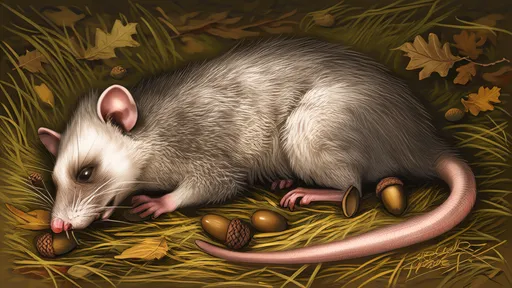
The Virginia opossum (Didelphis virginiana) has perfected one of nature’s most bizarre survival tactics: playing dead. This behavior, often referred to as "playing possum," is not merely an act but a complex physiological response that baffles predators and researchers alike. When threatened, the opossum collapses, its body stiffens, and it enters a state of thanatosis—a death-feigning strategy so convincing that even the most persistent predators lose interest. But what exactly happens inside the opossum’s body during this dramatic performance?
The Trigger: Fear and the Autonomic Nervous System
The opossum’s death-feigning behavior is initiated by an overwhelming stress response. When confronted by a predator, the animal’s autonomic nervous system kicks into overdrive. Unlike voluntary actions, such as running or biting, this reaction is entirely involuntary. The opossum’s brainstem activates a cascade of physiological changes, effectively shutting down voluntary motor control. The result? A limp, unresponsive body that appears lifeless.
Researchers believe this response is linked to an ancient survival mechanism shared by many prey species. However, the opossum takes it to an extreme. Its heart rate drops dramatically, breathing becomes shallow, and in some cases, it may even excrete a foul-smelling fluid from its anal glands—a final touch to sell the illusion of decay. This combination of physical shutdown and olfactory deception makes the performance nearly flawless.
The Science Behind the Shutdown
At the core of this behavior is a temporary paralysis mediated by neurotransmitters. Gamma-aminobutyric acid (GABA), an inhibitory neurotransmitter, floods the opossum’s nervous system, inducing muscle rigidity and immobility. Simultaneously, dopamine levels plummet, further reinforcing the catatonic state. This biochemical cocktail ensures the opossum remains motionless, even if prodded or bitten.
Interestingly, this state can last anywhere from minutes to several hours. Unlike fainting or losing consciousness, the opossum remains aware of its surroundings, albeit in a highly subdued manner. Electroencephalogram (EEG) studies have shown reduced but detectable brain activity during thanatosis, suggesting the animal is in a trance-like state rather than fully unconscious.
Evolutionary Advantages and Risks
From an evolutionary standpoint, playing dead is a high-risk, high-reward strategy. Most predators prefer live prey and will abandon a carcass if they believe it’s diseased or rotting. By mimicking death, the opossum exploits this instinct, buying precious time to escape once the threat has passed. However, the tactic isn’t foolproof. Some predators, like coyotes or birds of prey, may still attack a motionless opossum, and the animal’s prolonged immobility leaves it vulnerable to secondary threats, such as dehydration or overheating.
Despite these risks, the behavior persists because it works often enough to be worth the gamble. In fact, juvenile opossums are more likely to feign death than adults, possibly because their smaller size makes them more vulnerable. As they grow, they may rely more on other defenses, such as hissing or biting, but the instinct to play dead never fully disappears.
Comparing Thanatosis Across Species
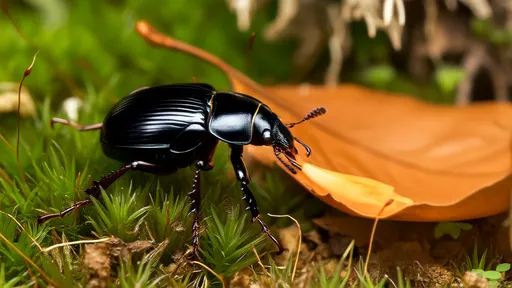
While the opossum is the most famous practitioner of thanatosis, it’s far from the only one. Many insects, reptiles, and even birds employ similar tactics. For example, the hognose snake flips onto its back, mouth agape, and releases a foul odor when threatened. Certain beetles go rigid and retract their limbs, resembling pebbles or debris. However, the opossum’s performance is unique in its complexity, blending physiological shutdown with behavioral theatrics.
What sets the opossum apart is the sheer comprehensiveness of its act. Most animals that play dead do so briefly or incompletely, but the opossum commits fully. Its ability to sustain the ruse for extended periods suggests a highly specialized neural mechanism—one that scientists are still working to fully understand.
Unanswered Questions and Future Research
Despite decades of study, many mysteries remain. For instance, how does the opossum’s brain decide when to "wake up"? Is there a threshold of safety that must be met before it resumes normal activity? Some researchers speculate that the return to mobility is triggered by a drop in stress hormones, but conclusive evidence is lacking.
Another puzzle is the role of learning in this behavior. Are opossums born knowing how to play dead, or do they refine the skill through experience? Observations suggest it’s largely innate, but environmental factors may influence its effectiveness. Further studies, particularly on opossums raised in controlled settings, could shed light on this question.
One thing is certain: the opossum’s death-feigning act is a marvel of natural selection. It’s a survival strategy that blurs the line between behavior and physiology, reminding us just how strange and wondrous evolution can be.
By /Jun 10, 2025
By /Jun 10, 2025
By /Jun 10, 2025
By /Jun 10, 2025
By /Jun 10, 2025
By /Jun 10, 2025
By /Jun 10, 2025

By /Jun 10, 2025
By /Jun 10, 2025
By /Jun 10, 2025
By /Jun 10, 2025
By /Jun 10, 2025
By /Jun 10, 2025
By /Jun 10, 2025
By /Jun 10, 2025